This blog is part three of a series on Flourishing in the Age of AI from Ed Stetzer. Read part two, "What Christians Should Be Asking About AI."
——
Written by Ed Stetzer and Todd Korpi
Imagine this scene: a parent’s teenager is on their phone constantly. When asked what they’re doing, the teen responds, “Chatting” or “texting.” The parent asks, “With who?” The teen rolls their eyes, sighs loudly, and says, “I’m just putting questions into Claude” (or ChatGPT, Gemini, Meta, or Grok). The parent soon discovers their child has been chatting with this AI bot for hours every day, for months.
On the one hand, the parent is relieved that their teen isn’t cheating on their homework or doing something overtly wrong. They’re just “chatting.” On the other hand, there’s an unsettling feeling, and the parent can’t quite pinpoint it. Something about the situation feels off. They don't know who to ask, and honestly don’t really want to ask anyone, so they pray about it, Google it, read a few articles, and form an opinion before moving on, convincing themselves they’ve done the best they could.
This scene is playing out in homes across the country, including in Christian families. People are navigating uncertain terrain individually and quietly, and this individual approach shouldn’t surprise us. After all, our culture prizes the self-made, singular hero. Lone wolf narratives in a society of individual consumers have conditioned us to navigate life privately. We mind our own business, and we expect everyone else to mind theirs, too.
So we instinctively treat our technology decisions as individual and private. We form opinions, make decisions, and set parameters on our own, because our life and our responsibilities are not really anyone else’s business. This mindset is deeply ingrained. And it’s also a particularly strange and unhealthy one for Christians.
Our faith has always been about community, growing together with Jesus, and for Jesus, showing and sharing his love—to one another and the world. We have inherited a faith that does not treat our lives as private, individual things. We are called (and privileged) to face life in the world together. The current AI revolution is one of the most pressing issues of the day, and we were meant to discern the moment together. And it starts with facing the problems with individualism and discernment head on.
The Problems with Individualism and Discernment
We are part of a culture that prizes autonomy above almost everything else. The ideal person is the self-sufficient individual who does not need to ask for help, making their own decisions and curating their own life. This cultural formation runs deep. It shapes our politics, our economics, our entertainment—and it shapes how we approach technology.
While dignifying the individual, the biblical tradition commends a more comprehensive view of things. The Christian vision of the human person is not merely the autonomous individual but someone who depends on others in covenantal relationship. When God created the man, he decreed that he should not be alone (Gen. 2:18).
Yet our individualist worldview often leads us to view discernment as private insight given to individual Christians by the Lord. A person prays and reads the Bible to seek wisdom and understand what they should do. The Lord then gives that person “discernment”—individually, privately, and directly.
Now, let me be clear: personal prayer, Scripture engagement, and individual conscience are all real and important. Part of the beauty of the Christian life is a direct, personal relationship with God through Jesus Christ. Individual discernment is an important reality in the Christian life. So that individual picture of discernment isn’t wrong, it’s just not the whole picture.
Instead, the New Testament sets out a pattern of individual Christians in a personal relationship with Jesus who also belong to the family of God. You and I are each an individual child of God, but together we’re children of God. A family. In fact, the Bible often speaks of Christians as a community. We’re not just the “individuals of God.” We’re the people of God.
The communal nature of Christian faith has important implications for the practice of discernment. For example, the earliest church didn’t rely solely on individual discernment. Acts 15 records the first Jerusalem Council, a gathering of apostles and elders who deliberated together on questions that had divided the community. Their conclusion wasn't handed down from a single discerner but forged in Spirit-led community: “It seemed good to us and to the Holy Spirit” (Acts 15:28).
Paul's letters are filled with the plural pronoun “you,” written to his readers in their collectivist culture. This “you” is hard to render in English, but the Southern contraction y’all or the language I grew up saying in New York—youse guys— start to capture it.
So, Paul is giving communal wisdom when he says, “Do not be conformed to this world, but be transformed by the renewing of your mind, that by testing you may discern what is the will of God” (Rom. 12:2). In fact, the very next verses describe the body of Christ as a community of mutually dependent members, not a collection of independent spiritual agents.
Discernment is a group project, a team sport, so why would we treat our approach to AI differently?
Awareness is good, but we must move from awareness to discernment. Awareness shows what AI is and what it can do, but discernment is about learning what AI is doing to us.
What We're Actually Doing
In our culture, people tend to make technological decisions instinctively and unintentionally, often without much thought. The fragmented individualism of our culture doesn’t give us wise ways to think about such things. So everyone ends up muddying their way toward whatever seems right in their own eyes (Jdg. 17:6).
While local churches and ministries are hosting conversations about AI, social media, tech addiction, and more, many of these conversations are still at the awareness stage. Awareness is good, but we must move from awareness to discernment. Awareness shows what AI is and what it can do, but discernment is about learning what AI is doing to us.
Business owners are restructuring their workforces. Teachers are deciding whether to allow or penalize AI use. Parents are trying to navigate AI companions for their lonely teenagers. Church leaders are figuring out how to leverage the good of this technology without doing harm. These decisions are not trivial, but they have genuine moral and spiritual weight. And too many people are making them in isolation.
Here is where the practice of discerning together in community must come in. We must start making consequential decisions about AI with the wisdom of the Spirit-empowered people of God (Prov. 11:14; 15:22; 24:6).
The local church offers a regularly gathered, multi-generational community that is committed to one another's formation within a common framework for evaluating human flourishing. That is an extraordinary resource if we deploy it wisely and intentionally.
The Gift the Local Church Has to Offer
The local church has something that almost no other institution in our culture can offer to this moment. The local church is one of the few community spaces that still exist in our society, as others like community centers, lodges, and clubs have begun to disappear. The local church offers a regularly gathered, multi-generational community that is committed to one another's formation within a common framework for evaluating human flourishing. That is an extraordinary resource if we deploy it wisely and intentionally.
Think about what communal discernment around AI could look like if the Church took it seriously. It would mean creating space in small groups, Sunday school classes, and intergenerational contexts. It would open opportunities for honest conversation and insight. Such conversations wouldn’t focus on rules or even best practices, but they would seek wisdom together.
The sixty-five-year-old retired teacher might notice something about AI-generated content that the twenty-three-year-old software developer cannot see. The mother of teenagers might see something the single professional entirely misses. The person navigating job displacement will have different insights than the person with financial security. And vice versa in each case.
Communal discernment creates a multiplicity of perspectives across life experience, vocation, age, and circumstance. These are ultimately all held together by a shared commitment to the Lordship of Christ and a vision for human flourishing in his name. And no individual can do this alone.
Some churches are already finding ways to do this well, and the patterns are instructive. They are starting with curiosity and creating space for people to share their experiences. They are bringing multiple generations into the conversation, recognizing that different cohorts have different vulnerabilities and different gifts. They are connecting discernment in our technological age to existing frameworks for formation. They aren’t looking for quick answers but for long-term patterns to become the people God calls us to be.
Such conversations don’t require expertise as much as they require community, honesty, and a shared commitment to submitting the questions that matter most to Jesus and the Bible.

The Invitation
The AI moment invites us to recover the Church’s atrophied virtue of community. We were never meant to figure out the most important things alone. We have a tradition of communal discernment. We have practices of spiritual growth, time-tested over centuries. We have a theological reality. We have the gathering of community. We simply need to lean into them.
When facing tough questions about the uncertain present (whether about technology or anything else), we must resist the instinct to resolve it by issuing a policy or pointing people to an article. We must resist the easy temptation to let people figure it out on their own. Instead, we must call the community together. We must bring everyone into the same room: the teenagers and the retirees, the business owners and the schoolteachers, the early adopters and the skeptics. Different cultures. Different perspectives. But one Lord, one faith, one baptism, one God and Father of all (Eph. 4:4-6).
And then we must do what the Church has always done at its best, like it did in Jerusalem in Acts 15. We must listen to one another, listen to Scripture, listen to the Spirit, and discern together what it means to be faithful in this moment.
Gloo and its partners are doing just this, entering into the conversation and believing that AI can, and must, be a force for good. That’s part of why I work with Gloo because aligning AI to empower faith communities and strengthen human connection is a good thing—helping churches and church leaders advance their missions like never before.
That is the body of Christ at work.
And in a cultural moment defined by fragmentation, technological revolution, distraction, and radical individualism, discernment in community might be one of the most powerful witnesses the Church can offer.
Author(s)
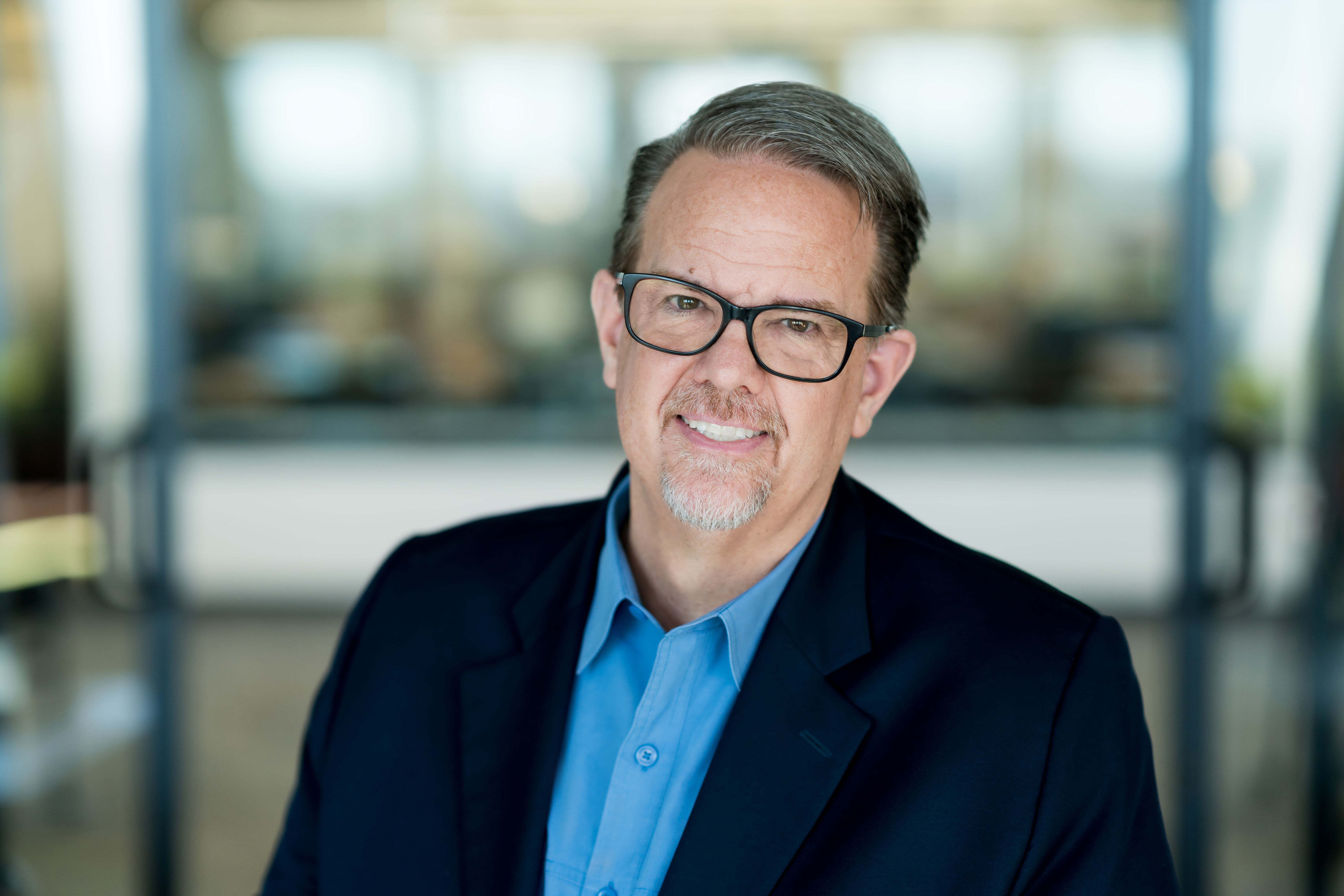
Ed Stetzer
Dean of the Talbot School of Theology