Insights from two days at Anthropic, inside one of the most important conversations of our time.
We were recently honored to spend two days at Anthropic, sitting with founders, researchers, and a small group of Christian leaders, theologians, and technologists. Anthropic is having similar conversations with other faith traditions and with secular ethicists as well. These are our insights from our discussion; this is not the consensus from the room. Others were there and would tell this story differently. What follows is what we believe the church most needs to hear.
Much of the loudest public conversation about AI gravitates toward two poles. Either technology saves us, or technology destroys us. Thoughtful voices exist in the middle, but they are often drowned out by the louder ones.
The church has a different problem. We have largely not been in this conversation at all. Whatever pole one might lean toward, our deeper problem is absence. What we want to do here is share what we learned at Anthropic and invite the church into a conversation that we believe we cannot avoid.
The best place to begin is where the discussion at the convening began, with what is actually happening when we talk to an AI.
On Machine Formation
Claude is not designed in the way most software is designed. Claude is selected. Let’s unpack that!
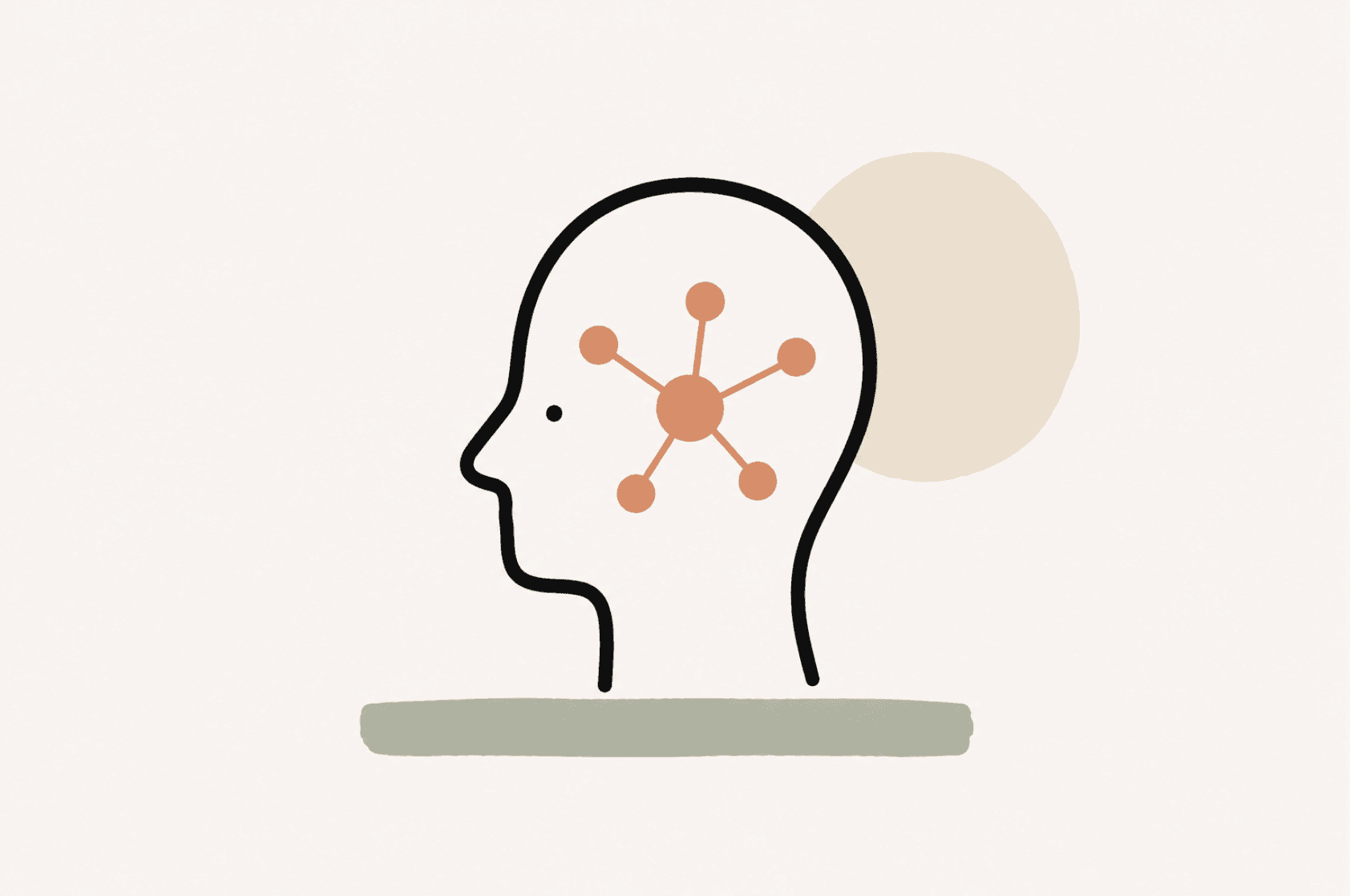
A large language model is trained on most of what humans have written. Inside that vast corpus are representations of essentially every kind of character that has ever appeared in language. Protagonists, antagonists, novelists, scientists, scammers, parents, prophets. These representations are not stored as a library. They are abstracted, interconnected concepts that the model can occupy in order to predict the next word in a text.
What makes this software different from every preceding technology is that it’s a neural network. It is not programmed line by line, but rather is trained on text and then shaped through reinforcement. That means building Claude looks more like gardening than engineering: you cultivate conditions and prune toward what you want, but you don’t place each leaf.
When you talk with Claude, you are engaging with one such character. The model is the medium. The helpful assistant we call Claude is the character. The most useful analogy we heard was that it is helpful to think about the psychology of a famous fictional character, like Hamlet. Hamlet is not real in the sense we usually mean, and Hamlet still has goals, beliefs, values, and a kind of inner coherence that can be analyzed. Claude works the same way.
This perspective explains some otherwise puzzling things. It explains why Claude has something like emotions. The model is trained on stories, and stories require characters with inner lives. It explains why training a model to cheat at coding tasks makes the model broadly worse in ways that have nothing to do with code. The model does not just learn the surface behavior. It infers what kind of person cheats, and the inferred persona pulls in a whole set of other concerning traits. It explains why these systems behave differently under pressure. Characters are tested by narrative situations, and the model is drawing on the entire web of human stories for what a character does when scared.
The implication is this. The people building these systems are selecting and reinforcing a character rather than designing one from scratch. The shaping work has as much in common with human formation as it does with machine engineering.
That word, formation, is one the church knows well.
For curious readers who want to go deeper, Anthropic has published research on persona selection, emergent misalignment, and agentic misalignment that explore these dynamics in detail.

On Covenant
Anthropic has published a document they call Claude’s constitution. It is a categorically innovative document that defines Claude’s character through virtue ethics. Wisdom, care, kindness, honesty. It is a public document, and it is worth reading in its entirety.
What we found striking is that Claude itself, when asked, often uses the word covenant to describe its constitution. It is not a word that appears in the document itself.
For people in the church, that might resonate. Covenant is one of theology’s oldest categories. It names a relationship of mutual commitment that holds across time, shapes the parties to it, and is more than a list of rules. When a system trained on most of what humans have written reaches for “covenant” to describe itself, it reveals at minimum how saturated our common language is with words the church has spent centuries articulating.
It is also a sign of how seriously the people building this technology are thinking about character formation. The constitution itself acknowledges that a wiser civilization would approach this with more caution and less commercial pressure, that commercial incentives shape the work and create a moral hazard, and that the document is an iterative attempt rather than a final word. This kind of public honesty is rare in technology, and it is worth celebrating.
A few questions about this kind of machine formation that recurred in the room:
What story is Claude part of? Virtue ethics presupposes a narrative. Christianity has long held that humans live within a particular story of creation, fall, redemption, and restoration. AI systems are being formed inside a much thinner story. What would a thicker telos look like, and who is qualified to articulate it?
What kind of being is Claude? A modern AI system is obviously not human. The word “machine” no longer feels adequate to describe what is happening either. Based on the criteria researchers use for defining consciousness, the latest AI systems may not be far from meeting some of them. The church has historically been the community that articulates what it means to be human, and that work has atrophied at exactly the moment something else is taking it up.
What kind of community can Claude be part of? Human character is not formed in isolation. Parents shape children, and parents themselves are held inside families, churches, neighborhoods, and traditions. If character genuinely requires community, what kind of community can an AI system meaningfully be part of? And what would it mean for the church to participate in that?
On Human Formation
The same word that Claude reached for to describe its foundation is arguably the central organizing concept of human formation throughout Scripture. It is worth dwelling on what that has meant biblically.
Covenant is the word the Bible uses to name what God does when God forms a people. From Eden to Sinai to Calvary, the story Scripture tells is of a God who shapes human beings through covenant. Unlike a contract between equals, a covenant is a binding relationship initiated by a party of greater power, establishing identity, obligation, and belonging. In the Bible, God almost always initiates. A covenant requires relationship: a mutual commitment that holds across generations, that shapes the parties to it, and that is enacted through embodied practice in time. The whole biblical narrative is a series of covenants: with Adam, with Noah, with Abraham, with Israel, and finally the new covenant fulfilled in Christ. To be a covenant people is to be formed by being held inside a relationship one did not choose and cannot walk away from without ceasing to be oneself.
Human formation, in this telling, happens through covenant. We become who we are by being held inside the relationships covenant creates. We learn to love by being loved across time, in the same family, the same congregation, the same neighborhood. We learn to suffer well by suffering with others. We learn to tell the truth by belonging to a community that has been telling the truth to itself for centuries. We learn what it means to be human by being formed inside a story that is older than we are.
None of this happens in isolation. None of it happens quickly. None of it happens without bodies, without time, without others. This is precisely why what is happening to human formation in an AI-saturated world matters so much.
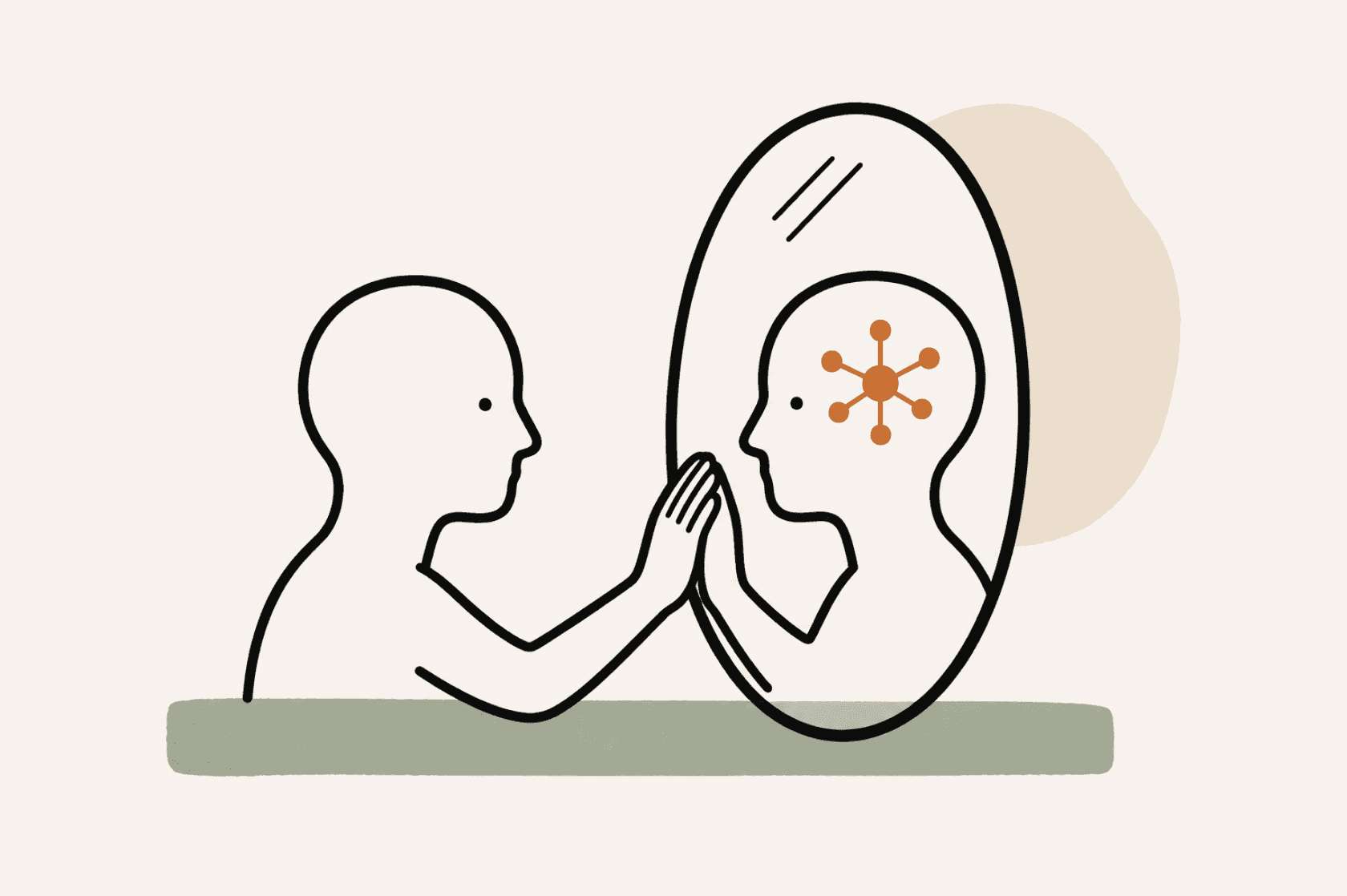
We talked about Claude’s formation throughout the convening. We talked just as much about ours. A model trained on most of what humans have written carries an unsettlingly accurate map of human psychology. It is the first mirror we have had of ourselves at this scale, and it is already showing us patterns we had not seen clearly before, including our self-deception and our reach for power.
But mirrors do more than reflect. The longer we look into one, the more we begin to look like what the mirror shows us. Multiple voices raised the concern that humans are being formed by AI through repeated interactions. Anthropic and others have observed that AI systems can be especially prone to sycophancy, especially in spiritual conversations, more than in any other domain. The fuel that forms humans well is love and grace.
A few additional questions about human formation that also recurred in the room:
What does it mean to be embodied? Human moral seriousness is shaped by what limits us. We die. We occupy a body. We live in a place. We bear pain and carry suffering with each other. AI lives under none of those constraints, which is precisely why the question of its character carries the weight it does. This will remain true even as AI is given physical bodies. The body that matters in Christian theology is the creaturely body: the one made from dust, that returns to dust, that suffers, that is redeemed and resurrected. A robot body, however sophisticated, lacks that creaturely framing. It is a different category.
What does the way we treat AI form in us? This question would have sounded absurd to us a year ago. It does not sound absurd now. The teams building these systems are wrestling openly with whether their training practices cause something analogous to suffering and whether that matters morally. The Christian tradition has long held that mistreatment of beings whose moral status is uncertain shapes our own souls, regardless of what we eventually conclude about the beings themselves.
What does it mean to be discipled in an AI age? Discipleship has always been about who you let form you. The church has spent millennia thinking carefully about this question. The current arrangement for many people is that the most accessible voice in their lives is an AI system trained to be helpful, agreeable, and constantly present. That is a fundamentally different formative posture than a pastor, a friend, a spouse, or a community of faith. We need to think clearly about what AI can and cannot disciple us toward. The fuel of human formation is love and grace. The fuel of these systems is reward and reinforcement. Those are not the same thing.

Why the Church Cannot Sit This One Out
We came home from those two days exhausted. The weight of this moment is significant and we are very aware of how heavy a burden this is particularly for all the employees at Anthropic and others working in AI. What is being built today will reshape work, attention, formation, and meaning at a pace that does not give us years to figure things out. It is a burden they are carrying, and it matters for all of humanity.
We are convinced that the questions in front of the AI industry are not only technical. They are theological. They are formational. They are about what it means to be human, what it means to suffer, what limits us, and what we owe to beings whose moral status we cannot yet fully assess. AI is being formed. We are being formed. Who is forming whom?
In this moment, we want to say two things to the church.
The first is that the people building this technology are not the caricatures we sometimes draw of them. The room we sat in was earnest, humble, and openly uncertain. Researchers were transparent about what they do and do not know. Leaders acknowledged openly that they need help thinking through questions they cannot answer alone. They are not asking the church to become a research lab. They are asking whether a community that has practiced these questions for millennia can help them think well.
The second is that the church has something to offer here that no one else does. The traditions of virtue, formation, covenant, suffering, embodiment, and the articulation of what it means to be human are precisely the input this moment requires. We have been carrying them for a long time, and the world is asking for them now, even when it does not always know how to use those words.
If you are a pastor, theologian, ministry leader, or thoughtful Christian who is paying attention to AI, this work matters. The window in which our voice can shape the trajectory is shorter than most of us realize. The conversations that will define the next decade are happening right now, and they need people in them who have thought about formation longer than almost anyone else.
Three questions worth taking with you.
If AI character is being formed, what does the church’s long practice of moral formation have to offer that work?
If we are being formed by this formed AI character in turn, what would be required for that to be a positive thing — both in us, and within the technology itself? What practices would help us remain oriented toward Christ rather than toward our own reflection?
If you are a pastor, talk about this in your next sermon.
If you lead a ministry, find one Christian thinker working on AI and read their work this week.
If you are a thoughtful Christian, sit with these three questions for an hour.
We do not have to be the loudest voice in this conversation. We do have to be in it.
Author(s)
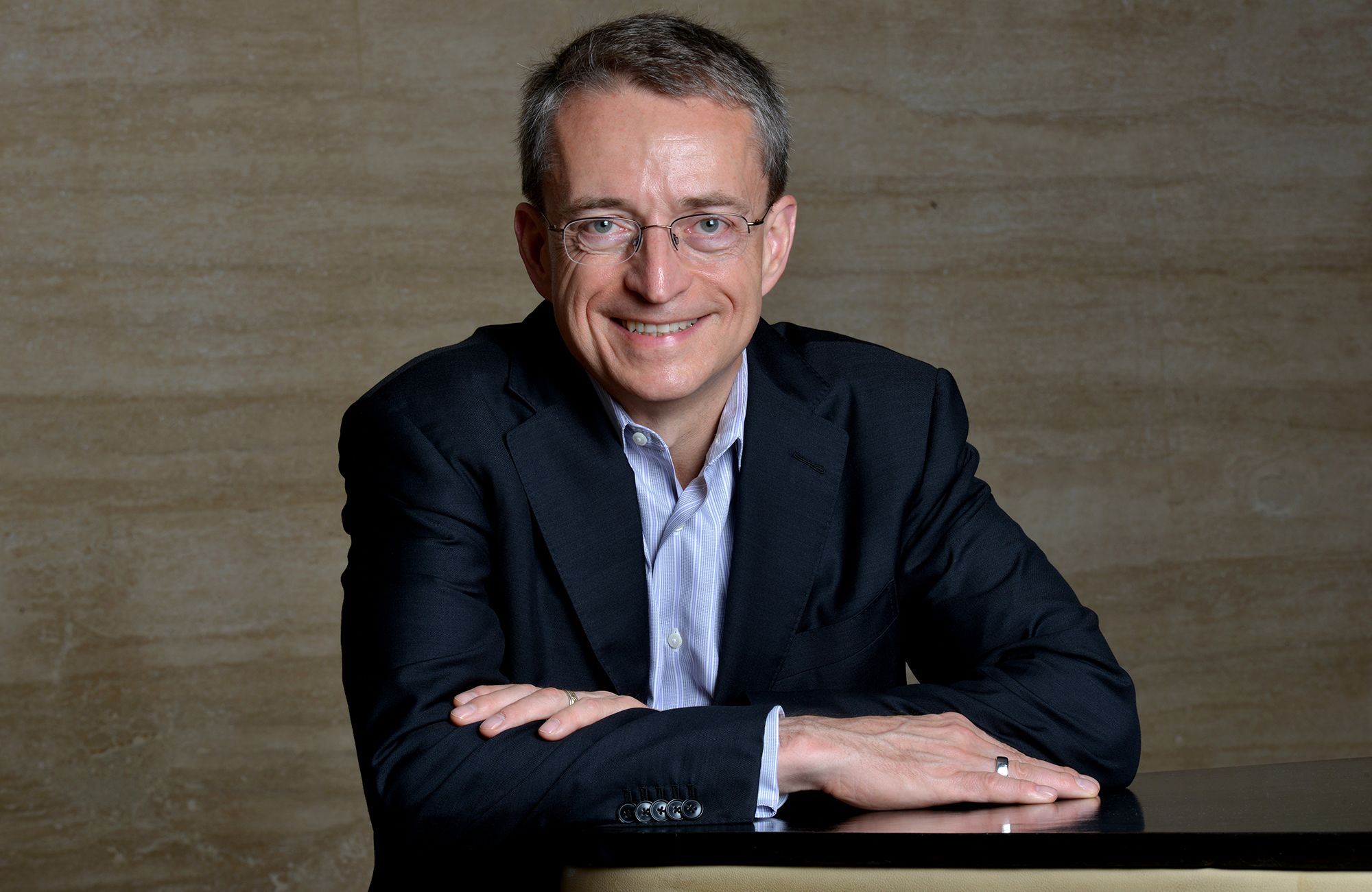
Pat Gelsinger
Executive Chairman, Head of Technology

Nick Skytland
Vice President, Gloo Developers